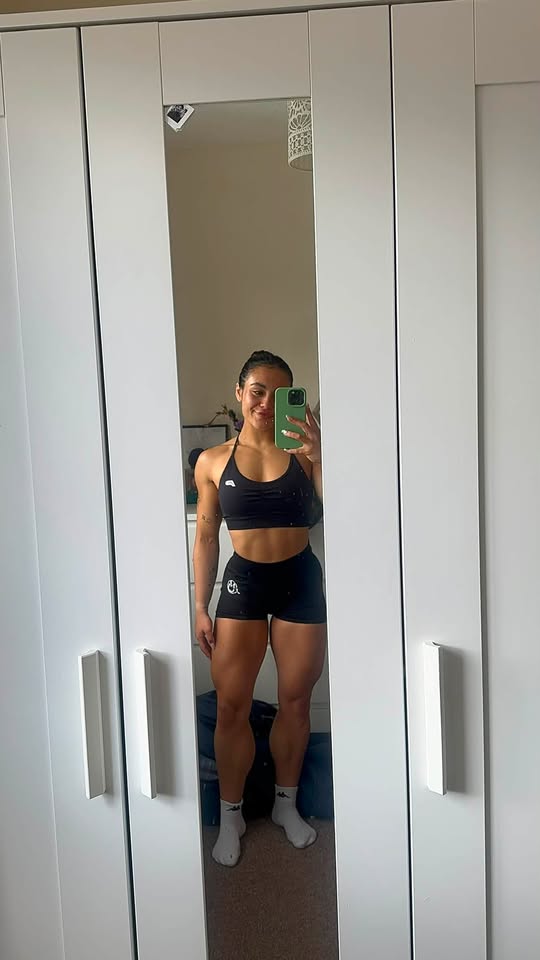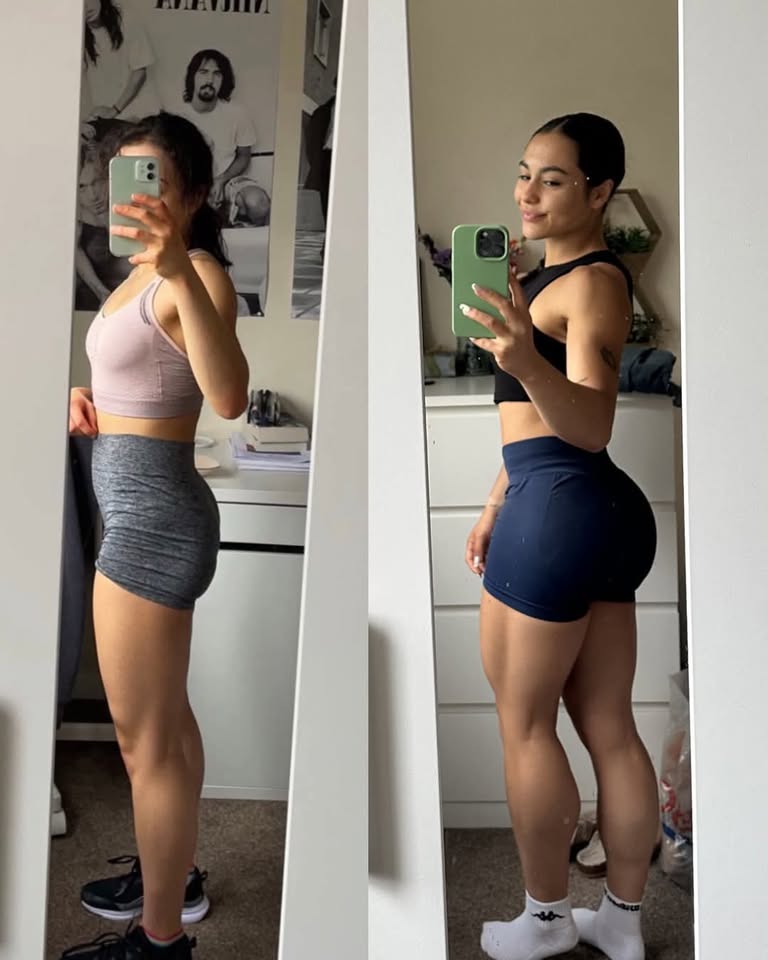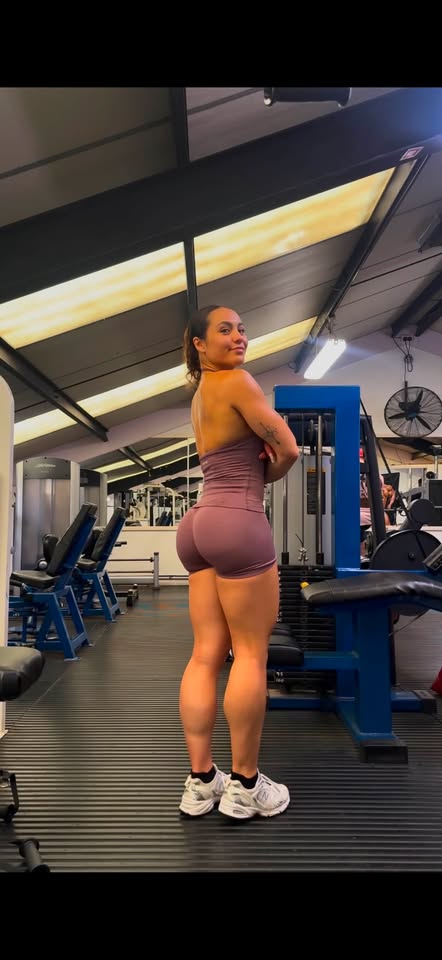
Build Lean Muscle. Shape Your Body. Feel Strong.
Quick Answer
To build muscle as a woman, focus on progressive strength training 3 to 4 times per week, eat a high-protein diet of 1.6 to 2.2g of protein per kg of bodyweight, and track your weights and reps consistently over time. Combine compound lifts — squats, hip thrusts, deadlifts, bench press — with targeted glute, leg, and upper body work. Fuel your workouts, recover properly, and stay consistent. That is the formula. Everything else is detail — and this guide covers all of it.
If you are ready to build real strength, shape your body, grow your glutes, and finally feel confident in the gym — you are in exactly the right place.
This is not a generic fitness article written by a brand. This is a real, honest, no-fluff guide built around the experiences of real UK women who have been exactly where you are right now — and who have transformed their bodies, their mindset, and their relationship with training and food through lifting weights and fuelling their bodies properly.
Every woman featured in this guide has shared her genuine story, her actual training programme, and her real nutrition approach so you can read it, follow it, and get results. No models. No influencers. No before and after photos taken under perfect lighting. Just real women, real journeys, and real advice that works.
Why Women Are Afraid of Lifting — And Why That Fear Is Holding You Back
The single biggest myth in women’s fitness is still alive and well in 2026 — and it is stopping thousands of women from getting the results they actually want.
The myth: lifting weights will make you look bulky.
The reality: it will not. Here is why.
Women have significantly lower testosterone levels than men — typically 15 to 20 times lower. Testosterone is the primary hormonal driver of large muscle mass development. Without it in sufficient quantities, the kind of extreme muscle size that the word “bulky” conjures is simply not physiologically possible for the vast majority of women through natural training.
What lifting weights actually does for women is this:
- Builds lean, defined muscle that creates shape and curves
- Increases your metabolic rate so you burn more calories at rest
- Strengthens your bones reducing the risk of osteoporosis later in life
- Improves your posture, balance, and functional strength for everyday life
- Builds genuine, lasting confidence that cardio alone simply cannot give you
The women in this guide lift weights consistently. None of them look bulky. All of them feel stronger, look better, and are happier than when they were doing endless cardio trying to stay as small as possible.
“Skinny is not what makes you feel good. Training to be strong and athletic does.” — Thea Mills, featured in this guide
What Makes This Guide Different
There are thousands of women’s fitness articles online. Most of them look the same — stock photos of women in perfect lighting, generic advice about eating less and moving more, and workout plans designed by people who have never spoken to a real woman about her actual goals, fears, and struggles.
This page is different for one reason — it is built around real women.
Every training guide, nutrition plan, and piece of advice in this page comes from a real UK woman who has lived it. Women of different heights, different builds, different starting points, and different goals — all sharing what has actually worked for them so you can find the story that resonates with yours and follow the plan that fits your life.
As this community grows, so does this page. New women. New stories. New training guides. New approaches. All in one place — updated regularly so it stays relevant, current, and genuinely useful.
This is not a one-size-fits-all fitness guide. It is a living, growing resource built by and for real UK women who want to be strong.
What You Will Find in This Guide
The science of building muscle for women — how your body actually builds muscle, why protein matters, and why strength training is the most effective tool available for body composition
A complete nutrition guide — how much to eat, how much protein you need, what to eat around your training, and how to fuel your body without fear
Common mistakes women make — the training and nutrition errors that slow progress and how to avoid them
Real women’s training and nutrition guides — complete workout programmes and daily nutrition plans from real UK women you can copy directly
Supplements for women — the honest guide to what actually helps and what is not worth your money
Everything you need to get started today — no confusion, no overwhelm, just a clear path forward
This page features real UK women who have volunteered to share their stories and training guides with our community. All content is published with full written permission. If you would like to be featured — see the bottom of this page.
This Guide Gives You Everything You Need to Start Building Muscle Today
Most women’s fitness guides give you information. This one gives you a complete system — built around what real women have actually done to get results, not what looks good on paper.
Here is exactly what you will get from reading this guide in full:
✅ A clear understanding of how women build muscle — the science explained simply so you know exactly what you are doing and why it works
✅ A complete training framework — how many days to train, which exercises to prioritise, how to structure your sessions, and how to keep progressing week after week
✅ A practical nutrition guide — how much to eat, how much protein you need, what to eat before and after training, and how to fuel your body confidently without fear or restriction
✅ Real women’s complete training and nutrition guides — copy the exact workout programmes and daily meal plans from real UK women who have already gotten the results you want
✅ Honest supplement advice — what actually helps women build muscle, what is not worth spending money on, and which specific products our community uses and recommends
✅ A community you can relate to — women of different body types, different starting points, and different goals — all sharing what has genuinely worked for them
Your Next Step — Choose How You Want to Start
Everyone starts from a different place. Find yours below and jump straight to the section that is most relevant to you right now:
I am a complete beginner and have never lifted weights before →
Start with the Foundations section below — it covers everything from how to set up your training week to which exercises to start with and how much weight to use.
I have been going to the gym but not seeing results →
Jump to the Common Mistakes section — the answer to why you are not progressing is almost certainly in there.
I want to follow a real woman’s complete programme →
Scroll down to the Real Women Real Results section and find the story and training guide that resonates most with your goal and body type.
I know how to train but want to optimise my nutrition →
Head straight to the Nutrition section for a complete guide to eating for muscle growth as a woman.
I want to know which supplements are worth taking →
Jump to the Supplements for Women section for honest, no-nonsense advice on what actually helps.
A Note Before You Start
Building muscle takes time. Not weeks — months. The women featured in this guide did not transform overnight and neither will you. But every single one of them will tell you the same thing:
The day they stopped chasing smaller and started chasing stronger was the day everything changed.
Not just physically — but mentally. Their relationship with food changed. Their confidence in the gym changed. The way they felt about their body changed. And their results — visible, real, sustained results — followed.
That shift starts with a decision. And if you are reading this, you have already made it.
Let’s get started.
Why More Women Are Lifting Weights in 2026 — And Why You Should Too
Quick Answer
Lifting weights will not make women bulky — it builds lean, toned, defined muscle while boosting metabolism, strength, and confidence. Weight training shapes your glutes, legs, and arms, burns more calories even at rest, and supports long-term bone health, hormone balance, and mental wellbeing. For women who want to change how their body looks and feels — strength training is the single most effective tool available.
For years women were told to avoid heavy weights. Stick to cardio. Lift light. Stay small. Do not take up too much space — in the gym or anywhere else.
That advice was wrong. And thankfully it is fading.
In gyms across the UK right now, more women than ever are stepping onto the lifting platforms, picking up the barbells, and building the bodies — and the confidence — that endless treadmill sessions never gave them. The results speak for themselves. Stronger bodies. Better shape. More energy. Higher metabolism. And a relationship with training that actually feels good rather than punishing.
This section explains exactly why strength training works so well for women — and why if you are not lifting yet, starting is the single best thing you can do for your body right now.
The Bulky Myth — Put to Rest Once and For All
The fear of getting bulky from lifting weights is the most persistent and most damaging myth in women’s fitness. It has kept millions of women away from the most effective training tool available — and it is based on a fundamental misunderstanding of how the female body actually works.
Here is the reality:
Women have significantly lower testosterone than men — typically 15 to 20 times lower. Testosterone is the primary hormonal driver of large-scale muscle mass development. The kind of extreme muscle size that the word “bulky” brings to mind requires either very high testosterone levels, decades of dedicated training, or both.
For the vast majority of women training naturally, building muscle is a slow, deliberate process that creates shape, definition, and curves — not size.
What lifting weights actually builds in women:
- Strong, round, developed glutes — the kind of shape that cardio simply cannot build
- Toned, defined legs — quads, hamstrings, and calves that look athletic and feel powerful
- Shapely arms and shoulders — defined without being disproportionate
- A lean, athletic silhouette — the body composition that most women are actually chasing
Want curves? Want definition? Want to look and feel athletic? Lifting — not endless cardio — is how you get there. Every woman in this guide will confirm it.
The Real Benefits of Lifting Weights for Women
When you commit to regular strength training your body changes from the inside out — and the benefits go significantly further than how you look in the mirror:
Shapes Your Body in Ways Cardio Cannot
Cardio burns calories during the session. Lifting builds muscle — and muscle is what creates the shape, curves, and definition most women actually want. You cannot cardio your way to a stronger, rounder glute or a more defined arm. You have to build those muscles through progressive resistance training.
Boosts Your Metabolism — Even When You Are Resting
This is one of the most powerful and most underappreciated benefits of strength training for women. Here is how it works:
- Training with weights creates micro-tears in your muscle fibres
- Your body burns energy to repair and rebuild those fibres stronger
- More lean muscle tissue increases your resting metabolic rate — meaning you burn more calories 24 hours a day, even while sitting, sleeping, and going about your normal life
This is why women who lift consistently can maintain a leaner body composition long-term without living on a treadmill. The muscle itself does the work.
Builds Genuine Confidence and Mental Strength
Ask any woman who lifts regularly what the most unexpected benefit of strength training has been and the answer is almost always the same — confidence.
Not just confidence in the gym. Confidence in daily life. The discipline of showing up to training sessions, tracking progress, and getting stronger week after week builds a mental resilience that extends far beyond fitness. Women who lift consistently report better mood, reduced anxiety, greater self-confidence, and a more positive relationship with their body than those who rely solely on cardio.
“Shifting my focus towards becoming stronger has allowed me to feel healthier, perform better in the gym and enjoy life much more.” — Thea Mills
Supports Long-Term Bone Health
This is particularly important for women and often completely overlooked. Resistance training places stress on your bones — and in response to that stress your bones adapt by becoming denser and stronger. Regular strength training significantly reduces the risk of osteoporosis and fractures later in life — a condition that affects women at far higher rates than men.
Starting strength training in your twenties and thirties builds a foundation of bone density that protects you for decades. It is one of the most important long-term health investments a woman can make.
Improves Posture, Joint Health, and Everyday Function
Strong muscles support your joints, improve your posture, and make everyday physical tasks easier and more comfortable. Back pain, poor posture, and joint discomfort that many women experience from desk-based lifestyles are all addressed through consistent strength training.
Supports Hormone Balance
Resistance training has been shown to support healthy hormone regulation in women — including improvements in insulin sensitivity, cortisol management, and the hormones that regulate mood and energy. For women dealing with hormonal fluctuations throughout their monthly cycle, consistent strength training can provide meaningful support for energy levels, mood, and overall wellbeing.
How Lifting Helps You Stay Lean Long-Term
Cardio is useful — it supports cardiovascular health, burns calories, and is good for mental wellbeing. But as a long-term body composition strategy, cardio alone has significant limitations.
The more cardio you do, the more your body adapts to it — becoming more efficient at the exercise and burning fewer calories per session over time. This is why many women find that despite hours of cardio every week, their body composition stays frustratingly similar.
Muscle changes the equation entirely.
Every pound of lean muscle you build increases your resting metabolic rate. Women who build meaningful amounts of lean muscle through consistent strength training find that maintaining a lean body composition becomes progressively easier over time — not harder — because their body is burning more calories around the clock.
The long-term strategy that actually works:
Strength training three to four times per week as your primary training method, with cardio used as a supplementary tool for cardiovascular health rather than the primary driver of body composition change.
This is exactly what the women in this guide do. And it is exactly what works.
Strong Looks Better. Strong Feels Better. Strong Is Better.
Lifting weights is not just about aesthetics — though the aesthetic results are real and significant. It is about building a body you are genuinely proud of for what it can do, not just how it looks.
The women in this guide have all discovered the same thing — the day they stopped training to be smaller and started training to be stronger was the day their results, their confidence, and their relationship with their own body fundamentally changed.
That shift is available to every woman reading this page. And it starts with picking up a weight and beginning.
“Food is never something to be afraid of. I have learned to appreciate what my body is capable of doing.” — Thea Mills
➡️ Next: How to Structure Your Training — how many days per week, which exercises matter most, and how to build a programme that produces visible results from day one.
5 Key Muscle-Building Principles Every Woman Needs to Know
Quick Answer
Women build muscle best by following five proven principles — lift challenging weights, use 8 to 12 reps with progressive overload, train 3 to 5 days per week, prioritise compound exercises, and support growth with adequate protein, calories, and recovery. Stick to these basics consistently and you will build lean muscle, boost your metabolism, and feel stronger every single week.
Building muscle does not have to be complicated — but it does need structure, consistency, and progression. These five principles are the foundation of every effective female strength training programme. Master them and everything else falls into place.
Principle 1 — Lift Heavy Enough to Challenge Your Muscles
The most common mistake women make in the gym is not lifting heavy enough.
To build lean muscle your workouts must apply sufficient stress to your muscles to spark the adaptation process. That means going significantly heavier than the light pink dumbbells that have been marketed to women for decades — and it means embracing the discomfort of genuinely challenging sets.
How to know if you are lifting heavy enough:
The last 2 to 3 reps of every set should feel genuinely difficult — controlled and with good form, but hard. If you could keep going indefinitely, the weight is too light. If your form breaks down before the last rep, the weight is too heavy. That zone of “hard but doable” is where muscle growth happens.
Why this matters:
Heavier weights create greater mechanical tension on your muscle fibres — the primary driver of muscle growth. Light weights with high reps do have a place in training, but they should complement heavier compound work, not replace it.
And to be clear one final time — you will not get bulky. Women’s naturally lower testosterone levels make large-scale muscle mass development physiologically very difficult. What you will get is a stronger, more defined, more shapely body. That is the goal. And heavier weights are how you get there faster.
💡 The last 2 reps of your set should feel tough but achievable. If you could keep going forever — go heavier.
🔗 Learn more: How Muscle Growth Works for Women
Principle 2 — Use the Right Sets, Reps, and Progressive Overload
Your rep and set ranges directly determine your results — and progressive overload is the engine that keeps those results coming.
The most effective rep and set ranges for women building muscle:
| Goal | Sets | Reps | Rest |
|---|---|---|---|
| Muscle growth (hypertrophy) | 3 to 5 | 8 to 12 | 60 to 90 seconds |
| Strength development | 3 to 5 | 4 to 6 | 2 to 3 minutes |
| Muscular endurance | 2 to 4 | 15 to 20 | 30 to 60 seconds |
For most women focused on building lean muscle and shaping their body — 3 to 4 sets of 8 to 12 reps per exercise is the sweet spot. This range maximises the combination of mechanical tension and metabolic stress that drives muscle growth.
Progressive overload — the most important concept in all of strength training:
Progressive overload simply means making your training progressively harder over time so your body keeps adapting. Your muscles will stop growing the moment training stops challenging them. To keep progressing you need to regularly do at least one of the following:
- Add weight to the bar or dumbbells
- Do one more rep than your last session
- Complete the same workout with slightly less rest
- Improve your range of motion or form quality
Track every session. Write down your weights and reps after every workout. Without tracking you are guessing — and guessing slows progress significantly. Even a simple notes app on your phone is enough.
🔗 See Full Training Plan: Beginner Workouts for Women
Principle 3 — Train 3 to 5 Days Per Week for Consistent Progress
You do not need to be in the gym every day — but you do need to show up regularly and consistently.
For most women the optimal training frequency for building muscle while allowing adequate recovery is 3 to 5 sessions per week. More than this is not necessarily better — recovery is when your muscles actually grow, and training too frequently without adequate rest undermines that process.
Training frequency by experience level:
Beginners (0 to 6 months of consistent training):
3 to 4 sessions per week. Focus on learning movement patterns, building a training habit, and establishing progressive overload across the basics.
Intermediate (6 months to 2 years):
4 to 5 sessions per week. Increased volume and frequency as recovery capacity improves and technique becomes more established.
Popular training splits for women:
Upper / Lower Split (recommended for beginners)
Train upper body twice and lower body twice per week. Simple, balanced, and highly effective for overall muscle development.
Push / Pull / Legs
Group exercises by movement pattern — pushing movements (chest, shoulders, triceps), pulling movements (back, biceps), and leg sessions. Excellent for intermediate lifters.
Glute and Lower Body Focus
Train lower body — particularly glutes, hamstrings, and quads — 2 to 3 times per week with upper body sessions on alternate days. Popular among women specifically targeting glute development. This is the approach Thea Mills follows — her complete training guide is later in this page.
🔗 Best Glute and Lower Body Workouts for Women
Principle 4 — Prioritise Compound Lifts at the Start of Every Session
Compound exercises — movements that work multiple muscle groups simultaneously — are the most time-efficient and most effective exercises available for building lean muscle and burning calories.
They should form the foundation of every training session. Do them first, when your energy and focus are at their highest. Isolation exercises (targeted single-muscle movements) come after.
Essential compound lifts for women:
| Exercise | Primary Muscles |
|---|---|
| Squats and squat variations | Quads, glutes, hamstrings |
| Deadlifts and Romanian deadlifts | Hamstrings, glutes, back |
| Hip thrusts and glute bridges | Glutes, hamstrings |
| Bench press and chest press | Chest, shoulders, triceps |
| Shoulder press | Shoulders, triceps |
| Lat pulldowns and pull-ups | Back, biceps |
| Rows (barbell, dumbbell, or cable) | Back, biceps, rear deltoids |
How to structure a session:
- Compound lifts first — heavier weights, longer rest periods (2 to 3 minutes)
- Isolation exercises after — lighter weights, shorter rest (60 to 90 seconds)
Example: Start with hip thrusts and Romanian deadlifts for glutes and hamstrings, then finish with cable kickbacks, leg curls, and lateral raises as isolation work.
💡 The women featured in this guide all build their sessions around compound lifts first. It is the single most consistent factor in the training approaches that produce visible results.
🔗 Full Body Workout Examples for Women
Principle 5 — Prioritise Protein, Fuel, and Recovery
Muscle is not built in the gym. It is built outside of it — while you are eating, resting, and sleeping.
Training is the stimulus. Everything else is the response. Without adequate nutrition and recovery, even the best training programme will produce limited results.
Protein — the most important nutrition variable:
Aim for 1.6 to 2.2g of protein per kg of bodyweight every single day — including rest days. Protein provides the amino acids your body uses to repair and build muscle tissue after training. Without enough of it, your muscles cannot recover and grow regardless of how hard you train.
Practical protein targets:
- 60kg woman → 96g to 132g protein per day
- 70kg woman → 112g to 154g protein per day
- 80kg woman → 128g to 176g protein per day
Spread your protein intake across 3 to 5 meals and snacks throughout the day rather than trying to consume it all in one or two large meals.
Total calories — undereating is the number one reason women do not see progress:
You cannot build muscle in a significant calorie deficit. Your body needs sufficient energy to both fuel your training and support the muscle-building process afterwards. Many women who are not seeing results are simply not eating enough — a direct consequence of years of diet culture messaging that equates eating less with success.
Eat enough to support your training. This does not mean overeating — it means fuelling your body properly.
Sleep — the most underrated recovery tool:
Aim for 7 to 9 hours per night. The majority of muscle repair and growth hormone release occurs during deep sleep. Consistently poor sleep directly reduces muscle protein synthesis, increases cortisol, and undermines the results of even the best training and nutrition plan.
Rest days — non-negotiable, not optional:
Rest days are not laziness. They are when your muscles repair, grow, and come back stronger. Training the same muscle groups every single day without adequate recovery leads to overtraining — which stalls results, increases injury risk, and leads to burnout.
Take your rest days seriously. Active recovery — light walking, stretching, yoga — is perfectly appropriate on rest days. Complete rest is equally valid.
💡 “Undereating is the number one reason women do not see progress. Track your protein and make sure you are fuelling your body — not restricting it.”
🔗 Women’s Diet Plan for Muscle Gain and Fat Loss
The 5 Principles — Summary
| Principle | Key Action |
|---|---|
| 1. Lift heavy enough | Last 2 reps should be hard but achievable |
| 2. Right reps and overload | 3 to 5 sets of 8 to 12 reps — add weight over time |
| 3. Train consistently | 3 to 5 sessions per week — show up regularly |
| 4. Compound lifts first | Big movements before isolation work every session |
| 5. Fuel and recover | 1.6 to 2.2g protein per kg — sleep 7 to 9 hours |
➡️ Next: Nutrition for Women — exactly what to eat, when to eat it, and how to fuel your body for muscle growth without fear or restriction.
Example Training Guide: What a Real Women’s Training Week Looks Like
Most women’s training guides give you a list of exercises and leave you to figure out the rest. This section shows you exactly what a structured, effective women’s training week actually looks like in practice — the sessions, the exercises, the sets, the reps, the rest periods, and the logic behind every decision.
This is not a beginner programme. It is an intermediate example — the kind of training week a woman who has been lifting consistently for 6 to 12 months might follow. If you are just starting out, use this as a blueprint for where you are heading and begin with 3 sessions per week using the compound lifts as your foundation.
Example Weekly Training Split
| Day | Session | Focus |
|---|---|---|
| Day 1 | Chest and Triceps | Upper body pushing |
| Day 2 | Back and Biceps | Upper body pulling |
| Day 3 | Shoulders | Upper body detail |
| Day 4 | Quads and Calves | Lower body front |
| Day 5 | Glutes and Hamstrings | Lower body posterior chain |
| Day 6 | Optional — mobility, cardio, or extra session | Active recovery |
| Day 7 | Full rest day | Recovery |
This split trains each muscle group approximately twice per week when combined with the compound overlap between sessions — chest and triceps on Day 1 receive additional work when pressing on shoulder day, for example. The structure is intentional and produces consistent, balanced development across the whole body.
How to Apply Progressive Overload to This Programme
Before diving into the sessions — the most important rule:
Track everything. Add weight or reps every week on at least one exercise per session.
Without progressive overload this is just exercise. With it, it becomes a muscle-building programme. Use a notebook or a free app like Strong or Hevy to log your weights and reps after every session.
Example Session 1 — Shoulder Day
Shoulders are one of the most impactful muscle groups for creating an athletic, feminine silhouette. Well-developed shoulders create width across the upper body, improve posture, and contribute to the overall shape most women are training for.
Session structure: Rear delt activation first → heavy pressing → lateral and front raise finisher
Rear Delt Cable Flys
1 warm-up set (15 reps) + 3 working sets (8 to 10 reps)
Set the cable at head height. Pull the handles outward in a wide arc squeezing your rear deltoids at the end of each rep. Control the return slowly. This movement is essential for shoulder health, posture, and the appearance of a strong upper back — do not skip it.
Cable Rope Face Pulls
3 sets of 8 to 10 reps
Set the cable at face height. Pull the rope toward your face separating your hands at the end of the movement. Excellent for rear deltoid and rotator cuff health — protects your shoulders long-term and contributes to that strong, defined upper back appearance.
Neutral Grip Shoulder Press
1 warm-up set + 4 working sets (10, 10, 8, 6 reps)
The primary strength movement of the session. Palms facing each other reduces shoulder joint stress compared to a standard press. Increase weight slightly on the 8 and 6 rep sets — this is your progressive overload opportunity for this exercise.
Smith Machine or Barbell Shoulder Press
3 sets of 10 to 12 reps
A second pressing movement for additional volume. Use slightly less weight than the previous press and focus on controlled form throughout the full range of motion.
Lateral Raise and Front Raise Superset
3 rounds — 8 to 10 reps of each exercise with no rest between
Perform lateral raises immediately followed by front raises — this is the superset. Rest 60 seconds between rounds. Lateral raises build shoulder width. Front raises develop the anterior deltoid. Together they create the complete, rounded shoulder shape that frames the upper body beautifully.
💡 Start every session with heavier compound movements while energy is highest. Finish with isolation movements and supersets for maximum burn and volume.
Example Session 2 — Glute Focused Leg Day
Glute development is one of the most requested training goals among women — and one of the most rewarding. This session is built around the exercises that produce the most visible and consistent results for lower body shape, strength, and development.
Session structure: Hip activation → priority compound → supporting compounds → isolation finishers
Adductor Machine
Warm-up set + 1 drop set to finish
Activates the inner thigh and prepares the hip joint for the heavier movements that follow. The drop set — reducing the weight immediately and continuing — adds extra volume and pump to an often neglected muscle group that contributes significantly to overall leg shape.
Lying Hamstring Curl
2 sets of 8 to 10 reps + 1 heavy set of 6 reps
Isolates the hamstrings before the hip thrust so they are pre-activated and ready for the glute-dominant work ahead. The final heavy set of 6 is the strength-focused set — increase the weight and focus on a slow controlled lowering phase for maximum hamstring development.
Smith Machine Hip Thrust
3 working sets of 10 reps + double drop set (15 reps x 2) to finish
The priority exercise of the entire session. Hip thrusts are the single most effective exercise for glute development available — no other movement isolates and loads the glutes as directly and as effectively. Load the bar progressively across your three working sets and squeeze hard at the top of every rep. The double drop set at the end — reducing the weight twice and continuing — provides maximum glute pump and volume to finish the movement.
Dumbbell Bulgarian Split Squats
2 sets of 10 reps each leg
Rear foot elevated on a bench, front foot forward. Lower your back knee toward the floor while keeping your torso upright. One of the most effective single-leg exercises available for glute and quad development. Challenging — but the results justify every difficult rep.
Seated Hamstring Curl
3 sets of 6 to 8 reps
A heavier, strength-focused hamstring curl variation. Focus on the full range of motion — full extension at the start and full contraction at the end of each rep. Slow and controlled throughout.
Cable Step-Ups
2 sets of 12 to 15 reps each leg
Attach a cable to your ankle and step up onto a box or bench driving through your heel. Develops the glute medius — the upper outer portion of the glute that contributes to that round, full shape from behind. Often overlooked but genuinely impactful.
Cable Glute Kickbacks
2 sets of 12 reps each leg
Attach the cable to your ankle and drive your leg back and up squeezing your glute hard at the top of each rep. Keep the movement controlled — resist the temptation to use momentum. A finishing isolation movement that adds detail and definition to the glute.
🔗 Build Your Glutes — Full Guide
Key Principles Behind This Programme
Compound lifts come first — always. Big multi-joint movements (hip thrusts, presses, rows) are performed while energy and focus are highest. Isolation exercises come after.
Progressive overload every session — track your weights and aim to improve on at least one exercise per session. Without this the programme stops working.
Rest periods are not optional — 2 to 3 minutes between heavy compound sets. 60 to 90 seconds between isolation exercises. Cutting rest short reduces performance and undermines the quality of your training.
Intensity techniques add variety — drop sets, supersets, and tempo work are used strategically to add volume and intensity. They are tools — not every set needs them.
Recovery is part of the programme — Day 6 is optional and Day 7 is a full rest day. Take them seriously. Muscle grows during recovery, not during training.
This is one example of how an effective women’s training week can be structured. The right programme for you depends on your goals, experience level, and how your body responds to training. Use this as a guide and adapt it to suit your needs — or follow one of our featured women’s complete programmes below.
Real Women. Real Results. Real Training Guides You Can Follow.
This is the part of this page that makes it genuinely different to every other women’s fitness guide online.
Every woman featured here has volunteered to share her complete story, her actual training programme, her real nutrition approach, and the honest lessons she has learned along the way. No models. No influencers. No stock photos. Just real UK women — different body types, different starting points, different goals — sharing what has actually worked for them so you can read it, follow it, and get results.
As our community grows so does this page. New women. New stories. New training guides. New approaches. All in one place — updated regularly so it stays current, relevant, and genuinely useful.
Find the woman whose story resonates most with yours. Follow her guide. And if you want to share your own journey — see the bottom of this page.
⚠️ A note before you read: Thea’s story touches on her relationship with food and body image, including her experience with an eating disorder. We share it with her full permission because we believe real, honest stories matter. If any part of this resonates with something you are going through personally, please know that support is available. The Beat Eating Disorders helpline is free and confidential — 0808 801 0677 — or visit beateatingdisorders.org.uk
🌟 Thea Mills — Training for Strength, Not Smallness
Thea Mills is proof that the most transformative thing a woman can do in the gym is change what she is training for.
Not to be smaller. Not to burn as many calories as possible. Not to fit into a number on a scale or a label on a pair of jeans.
To be strong. To be athletic. To feel good — physically and mentally — and to look after her body rather than fight against it.
Thea’s journey to this point has not been straightforward. It has taken almost a decade of hard work, honesty, and real commitment to get here. But where she is now — training with purpose, eating with confidence, and feeling genuinely healthy — is a place worth every difficult step it took to reach.
Where Thea Started — And What She Was Training For
When Thea first started training her workouts looked very different to what they do today. No structure. No programme. Random exercises found online, a lot of cardio, mostly bodyweight movements — all driven by one goal: stay as small as possible.
“I thought that weights would make me look bulky — but that is so far from the truth.”
She was afraid of lifting heavier. She was not tracking progress or following a plan. She changed exercises every session and had no concept of progressive overload — which meant that despite the time and effort she was putting in, making meaningful long-term progress was almost impossible.
Underneath all of this was something more serious. In 2017 Thea was diagnosed with anorexia nervosa.
“I skipped meals, avoided carbohydrates and believed that eating less would always produce better results. I focused far more on reducing calories than on fuelling my body for training. My energy levels, recovery and relationship with food were not healthy.”
For almost ten years — through diagnosis, through recovery, through the incredibly difficult work of rebuilding a healthy relationship with food and her own body — Thea kept going. And gradually her relationship with training began to change too.
The Shift — From Shrinking to Becoming Strong
The turning point for Thea was not a single moment — it was a gradual realisation that the goal she had been chasing was making her feel worse not better.
“I have also learned that being as lean or as small as possible does not make you more attractive or happier. In my experience, constantly chasing the lowest body weight left me feeling physically and mentally worse.”
She began to learn about training properly — about compound lifts, about progressive overload, about giving her body enough rest to actually recover and grow. And crucially she began to change her relationship with food — from something to be feared and restricted to something that fuelled her performance and supported her health.
“Shifting my focus towards becoming stronger, fuelling my body properly and building healthy, sustainable habits has allowed me to feel healthier, perform better in the gym and enjoy life much more.”
Today Thea trains to feel strong and athletic. She wants to look good — but she also wants to feel good, move well, and build a body that she is proud of for what it can do, not just how it appears.
“Skinny is not what makes you feel good. Training to be strong and athletic does.”
Thea’s Training Guide — Follow Her Programme
Thea currently trains three strength sessions per week alongside zone 2 cardio. Her strength sessions focus on building her lower body — particularly glutes and hamstrings — while maintaining upper body strength and overall fitness.
Her cardio is flexible and enjoyable — runs, stairmaster, swimming, or cycling. She keeps it in the zone 2 range (conversational pace, sustainable effort) and mixes it up to stay motivated. Zone 2 cardio burns fat, supports cardiovascular health, and does not interfere with strength training recovery.
How to Structure Your Week Like Thea
| Day | Session |
|---|---|
| Day 1 | Strength Session |
| Day 2 | Zone 2 Cardio (run, swim, cycle, or stairmaster) |
| Day 3 | Strength Session |
| Day 4 | Rest or light walk |
| Day 5 | Strength Session |
| Day 6 | Zone 2 Cardio |
| Day 7 | Full rest day |
Adjust based on your schedule — the key is hitting three strength sessions and keeping cardio separate from your lifting days where possible.
Thea’s Full Strength Session — Copy Her Workout
How to use this guide:
- Start every session with the compound lifts
- Rest 2 to 3 minutes between heavy compound sets
- Rest 60 to 90 seconds between isolation exercises
- Focus on progressive overload — aim to lift slightly more or do one extra rep each session
- Track your weights and reps every session
🏋️ Lower Body — Glutes, Hamstrings, and Quads
Smith Machine Squats
3 to 4 sets — 6 to 10 reps
Feet shoulder width apart, toes slightly out. Lower until thighs are parallel to the floor. Drive through your heels to stand. A fundamental compound movement that develops the quads, glutes, and core simultaneously.
Romanian Deadlifts
3 to 4 sets — 8 to 10 reps
Hinge at the hips with a soft bend in the knees. Lower the bar down your shins until you feel a deep stretch in your hamstrings. Drive hips forward to stand. Keep your back flat throughout. One of the most effective hamstring and glute exercises available.
Hip Thrusts
3 to 4 sets — 8 to 12 reps
Upper back on a bench, barbell across your hips. Drive through your heels and squeeze your glutes hard at the top of every rep. Thea’s priority glute exercise — the movement she tracks most carefully for progressive overload.
Bulgarian Split Squats
3 sets — 8 to 10 reps each leg
Rear foot elevated on a bench, front foot forward. Lower your back knee toward the floor. Challenging but one of the best exercises available for glute and quad development — worth every difficult rep.
💪 Upper Body — Back and Biceps
Lat Pulldowns
3 sets — 8 to 12 reps
Pull the bar down to your upper chest leaning back slightly. Squeeze your lats at the bottom. Control the weight on the way back up. Builds the back width that contributes to an athletic, strong silhouette.
Seated Rows
3 sets — 8 to 12 reps
Pull the handle to your lower chest with elbows close to your body. Squeeze your shoulder blades together at the end of each rep. Control the return. Excellent for mid-back thickness and posture.
Bicep Curls
3 sets — 10 to 15 reps
Full range of motion — lower all the way down, curl all the way up. Do not swing the elbows forward. Controlled throughout.
💪 Upper Body — Shoulders and Triceps
Shoulder Press
3 sets — 8 to 10 reps
Press overhead until arms are fully extended. Lower with control. Can be done with dumbbells or a barbell. Builds shoulder width and upper body strength.
Lateral Raises
3 sets — 12 to 15 reps
Light weight, full control. Raise arms out to the sides until parallel with the floor. Lower slowly. Builds shoulder width and creates the athletic upper body shape.
Tricep Extensions
3 sets — 10 to 15 reps
Keep elbows close to your head. Full extension at the bottom, controlled return. Essential for toned, defined arms.
Progressive Overload — How Thea Keeps Improving
Each week Thea aims to do at least one of the following:
- Lift slightly more weight on at least one exercise
- Do one more rep than last session
- Rest slightly less between sets
- Improve form and range of motion
“Consistency, progressive overload and recovery are much more important than spending more time in the gym.” — Thea
Thea’s Nutrition Guide — Eat Like She Does
Daily calorie intake: Approximately 2,300 calories on active days
Approach: 80/20 — 80% whole nutritious foods, 20% flexible enjoyable eating
Protein target: 1.6 to 2g per kg of bodyweight daily
Thea’s Typical Day of Eating
Breakfast
Greek yoghurt (200g) + rolled oats (50g) + mixed berries or banana
Protein, slow-release carbohydrates, and natural vitamins to start the day fuelled.
Lunch
150 to 200g grilled chicken breast + 150g cooked rice + vegetables of choice
Lean protein for muscle recovery, complex carbohydrates for sustained energy.
Snack
Apple or banana + small pot of Greek yoghurt
Quick protein and natural energy between meals.
Dinner
150 to 200g salmon, cod, or lean beef mince + 200g sweet potato or white rice + vegetables
High protein, complex carbohydrates, and micronutrients to close the day well.
Evening snack (if needed)
Protein shake, protein bar, cottage cheese, or Greek yoghurt
Overnight muscle recovery support on training days.
Thea’s Key Nutrition Principles
1. Protein at every meal — aim for 1.6 to 2g per kg of bodyweight daily spread across all meals and snacks
2. Do not fear carbohydrates — oats, rice, potatoes, and fruit fuel your training and replenish muscles after sessions
3. Eat enough total calories — you cannot build muscle, train hard, or feel good in a significant calorie deficit
4. Balance over perfection — the 80/20 rule means no food is forbidden. Consistency over weeks and months matters more than any single meal
5. Eat until content — not stuffed. Build an intuitive sense of what your body needs by eating regularly and including all food groups
Supplements Thea Uses
Whey Protein — daily protein top-ups and post-workout recovery
Creatine — strength, power, and muscle growth support
👉 Shop Whey Protein at Muscle Products Store
👉 Shop Creatine at Muscle Products Store
👉 Shop All Supplements for Women
The Mistakes Thea Made — And What She Learned
The mistakes:
- Undereating and not fuelling her body for training
- Too much cardio, not enough lifting
- Fearing carbohydrates and fats
- Constantly changing exercises instead of getting stronger at the basics
- Not prioritising recovery or rest days
- Focusing on scale weight rather than overall health and strength
The lessons:
“Food is never something to be afraid of. Instead of focusing solely on how your body looks, I have learned to appreciate what my body is capable of doing.”
“I am so much happier and healthier for this — and it has been a long ride getting to this point. Almost ten years of hard work and prioritising getting myself to a good place mentally and physically.”
Thea’s Advice to Women Starting Their Fitness Journey
Train to be strong — not small.
Eat to fuel your body — not to punish it.
Focus on what your body can do — not just how it looks.
Be consistent and patient — results come from showing up week after week.
Give yourself permission to enjoy food and rest — both are part of the process.
“Shifting my focus towards becoming stronger has allowed me to feel healthier, perform better in the gym and enjoy life much more.” — Thea Mills.
📸 Follow Thea’s journey on Instagram: @thea_mills for daily training inspiration and honest fitness content.
💪 Train with Thea — Personal Training Enquiries Welcome. Thea is a qualified personal trainer who works with women at all experience levels — from complete beginners to experienced lifters wanting to take their training to the next level. If her story has resonated with you and you would like personal guidance from someone who truly understands the journey, reach out to Thea directly on Instagram to discuss working together.
🌟 Your Story Could Be Here Next
Are you a woman with a fitness journey worth sharing? A training guide other women could follow? An honest story about where you started and where you are now?
We are always looking for real UK women to join this growing community — all body types, all experience levels, all goals welcome.
Get in touch at customersupport@muscleproductsstore.co.uk and tell us a little about your journey. We would love to hear from you.
7 Common Mistakes Women Make When Building Muscle (And How to Fix Them)
Quick Answer
The most common mistakes women make when trying to build muscle are doing too much cardio, lifting too light, undereating (especially protein), skipping rest days, not tracking strength progress, switching workouts too often, and fearing getting bulky. Fix these by focusing on progressive strength training, eating enough protein and calories, and following a consistent plan over time.
Building muscle is not complicated — but certain habits can slow your progress or stall your results completely. Every woman featured in this guide has made some of these mistakes. Every single one of them will tell you the same thing — recognising and fixing them was the turning point.
Here are the seven most common mistakes and exactly how to correct them.
Mistake 1 — Doing Too Much Cardio and Not Enough Resistance Training
Cardio is valuable for cardiovascular health, mental wellbeing, and general fitness. But when it becomes the primary training tool for women who want to change their body composition, it consistently underdelivers.
Why it is a problem:
Excessive cardio burns calories your body needs to recover from strength training and build muscle. It also adapts quickly — your body becomes more efficient at cardio over time, burning fewer calories per session. The more cardio you do without building muscle, the harder maintaining a lean physique becomes long-term.
The fix:
Keep cardio to 2 to 3 sessions per week while building muscle — and treat it as a supplement to your strength training rather than the main event. Zone 2 cardio (conversational pace, sustainable effort) is ideal — it supports cardiovascular health and fat burning without competing with muscle recovery.
Put most of your energy into lifting progressively heavier weights. The muscle you build will do more for your long-term body composition than any amount of cardio.
💡 Thea combines three strength sessions per week with zone 2 cardio on alternate days. This is the balance that produces results without compromising recovery.
Mistake 2 — Lifting Too Light for Too Long
This is perhaps the most common mistake in women’s fitness — and the one that causes the most frustration. Light dumbbells are a perfectly appropriate starting point. Staying there indefinitely is not.
Why it is a problem:
Muscles adapt to the demands placed on them. When those demands stop increasing — when the weight stays the same week after week — the muscle stops growing. You will maintain what you have but you will not build anything new.
The fix:
Apply progressive overload consistently. Increase the weight every 1 to 2 weeks, add a rep to your working sets, or reduce your rest periods. The last 2 to 3 reps of every working set should feel genuinely difficult. If they do not the weight is too light.
Track your weights and reps after every session. Without tracking you have no way of knowing whether you are applying progressive overload or just going through the motions.
🔗 Learn How Muscle Growth Works for Women
Mistake 3 — Undereating — Especially Protein
Undereating is the single most common reason women do not see the results they are working for — and it is almost always rooted in years of diet culture messaging that equates eating less with better results.
Why it is a problem:
Your body needs calories and protein to repair and rebuild muscle tissue after training. In a significant calorie deficit your body prioritises survival over muscle building — it will use muscle tissue as an energy source rather than building new muscle. No amount of training overcomes chronic undereating.
Insufficient protein specifically means your body lacks the amino acids needed to repair and grow muscle tissue regardless of how hard you train.
The fix:
Eat 1.6 to 2.2g of protein per kg of bodyweight every single day — including rest days. Eat enough total calories to fuel your training and support recovery. Do not fear carbohydrates — they are the primary fuel source for resistance training and are essential for performance and recovery.
Practical protein targets:
- 60kg → 96g to 132g protein per day
- 70kg → 112g to 154g protein per day
- 80kg → 128g to 176g protein per day
If hitting your protein target through food alone is challenging, a quality whey protein supplement is one of the simplest and most effective solutions available.
🔗 Women’s Diet Plan — Fat Loss or Muscle Gain
🔗 Best Whey Protein for Women UK
Mistake 4 — Skipping Rest Days
Rest days feel unproductive. They are not. They are when the actual muscle building happens.
Why it is a problem:
Training creates the stimulus for muscle growth — but the growth itself occurs during recovery. When you train the same muscle groups repeatedly without adequate rest, you are interrupting the repair process before it completes. The result is stalled progress, increased fatigue, and a significantly higher risk of injury and burnout.
The fix:
Schedule at least 1 to 2 full rest days per week and take them seriously. Aim for 7 to 9 hours of sleep per night — the majority of growth hormone release and muscle protein synthesis occurs during deep sleep. Active recovery on rest days — light walking, gentle stretching, yoga — is perfectly appropriate. But do not train the same muscle groups on consecutive days without giving them adequate time to recover.
💡 Rest days are not laziness. They are a non-negotiable part of a muscle-building programme. The women in this guide all take their recovery as seriously as their training.
Mistake 5 — Not Tracking Strength Progress
Focusing exclusively on how your body looks in the mirror is one of the most demoralising ways to measure fitness progress — because visible physical changes take months and are difficult to assess objectively day to day.
Why it is a problem:
Without tracking your performance in the gym you have no objective measure of whether your training is working. You cannot apply progressive overload consistently if you do not know what you lifted last session. And you miss the genuine motivation that comes from seeing your strength increase week after week.
The fix:
Track your weights, reps, and sets after every session — even a simple notes app works perfectly. Celebrate performance wins — an extra rep on your hip thrust, an extra 2.5kg on your Romanian deadlift, completing your sets with less rest than last week. These are the real markers of progress and they will keep you motivated on the days when the mirror is not telling you what you want to hear.
Mistake 6 — Switching Workouts Too Often
New workout programmes are exciting. Sticking to one long enough to actually see results from it is where most women struggle.
Why it is a problem:
Your body adapts to training over time — that adaptation is how muscle grows. But adaptation takes time. Switching programmes every two to three weeks before your body has had the chance to respond means you are constantly starting over. You never build the progressive overload and consistent stimulus that actually produces visible results.
The fix:
Commit to a programme for a minimum of 6 to 8 weeks before making significant changes. Focus on getting stronger in your key compound lifts — squats, hip thrusts, deadlifts, rows, and presses. When you can lift meaningfully more weight on those movements than when you started, your programme is working. Do not abandon it.
🔗 Beginner Workout Plan for Women
Mistake 7 — Fear of Getting Bulky
This mistake is listed last — but it is the one that stops women from even starting. And it is based on a complete misunderstanding of female physiology.
Why it is a problem:
Women who are afraid of getting bulky from lifting weights avoid the most effective tool for changing their body composition. They stick to light weights and cardio — the combination that produces the least visible results — and then conclude that the gym is not working for them.
The reality:
Women have 15 to 20 times less testosterone than men. Testosterone is the primary hormonal driver of the kind of large-scale muscle mass that the word “bulky” implies. For the vast majority of women training naturally, building muscle is a slow, deliberate process that creates shape and definition — not size.
The women featured in this guide lift heavy weights consistently. Read their stories. Look at their results. None of them are bulky. All of them are stronger, more confident, and happier than before they started lifting.
The fix:
Trust the process. Lift heavy. Eat well. Be consistent. The body you are afraid of building is not the body lifting weights will give you — it is the body that strength training, done consistently over time, will replace.
Mistakes Are Part of the Journey — Learn and Keep Going
Every woman makes some of these mistakes. Every woman featured in this guide has made them. The difference between women who get results and women who do not is not perfection — it is the willingness to recognise what is not working, make the adjustment, and keep going.
You now know the seven most common training mistakes — and exactly how to fix every one of them. Apply this knowledge to your training and you will be ahead of the vast majority of women in any gym in the UK.
Your Next Steps
Choose where to go next based on where you are right now:
👉 Beginner Workout Plan for Women — A simple weekly split to get started immediately
👉 Build Your Glutes — Full Guide — Targeted lower body and glute development
👉 Women’s Diet Plan — Fat Loss or Muscle Gain — Adjust your calories and macros for your specific goal
👉 Learn How Muscle Growth Works for Women — Understand the science behind your training
👉 Shop Supplements for Women at Muscle Products Store — Whey protein, creatine, and essentials for faster progress
With a plan, consistency, and the knowledge to avoid the mistakes that hold most women back — you have everything you need to build the strong, lean, confident body you are training for.
The only thing left to do is start.
Your Beginner Action Plan — Start Building Lean Muscle Today
Quick Answer
The fastest way for women to start building lean muscle is to follow a structured strength routine 3 to 4 days per week, eat a high protein calorie-supportive diet, progressively lift heavier weights over time, and recover properly between sessions. You do not need a perfect plan — you need a good plan followed consistently. This is it.
You have read the science. You have seen the training guides. You have read the stories of real women who have already done what you are about to do.
Now it is time to act.
Every woman featured in this guide started exactly where you are right now — reading, researching, and wondering where to begin. The ones who got results did one thing differently from the ones who did not. They started. Imperfectly, uncertainly, with questions still unanswered — but they started.
This five step action plan removes every reason to delay. Follow it and you will be training with purpose, fuelling your body properly, and making measurable progress within the first week.
Step 1 — Choose Your Training Split and Commit to It
Pick one of these three options and stick with it for a minimum of 8 weeks:
Option A — Upper Lower Split (recommended for most beginners)
Train four days per week alternating between upper body and lower body sessions. Simple, balanced, and highly effective for overall muscle development.
| Day | Session |
|---|---|
| Monday | Upper Body |
| Tuesday | Rest or cardio |
| Wednesday | Lower Body |
| Thursday | Rest or cardio |
| Friday | Upper Body |
| Saturday | Lower Body |
| Sunday | Rest |
Option B — Three Day Full Body (ideal if you can only commit to 3 sessions)
Train three days per week hitting the full body each session. Longer rest periods between sessions make this ideal for complete beginners.
| Day | Session |
|---|---|
| Monday | Full Body |
| Wednesday | Full Body |
| Friday | Full Body |
| All other days | Rest or light cardio |
Option C — Glute and Lower Body Focus (for those whose primary goal is glute development)
Three lower body sessions and two upper body sessions per week. Follows the same structure as Thea’s programme featured in this guide.
| Day | Session |
|---|---|
| Monday | Lower Body — Glutes and Hamstrings |
| Tuesday | Cardio |
| Wednesday | Upper Body |
| Thursday | Rest |
| Friday | Lower Body — Quads and Calves |
| Saturday | Upper Body |
| Sunday | Rest |
🔗 Full Beginner Workout Plan for Women
Step 2 — Build Every Session Around Compound Lifts
Start every single session with compound exercises — multi-joint movements that work multiple muscle groups simultaneously.
These are the exercises that build the most muscle in the least time and should form the foundation of every training session you do. Do them first while your energy and focus are at their highest.
Your essential compound exercise list:
| Exercise | Primary Muscles | Why It Matters |
|---|---|---|
| Squats | Quads, glutes, core | The foundation of lower body development |
| Hip Thrusts | Glutes, hamstrings | The single best glute building exercise available |
| Romanian Deadlifts | Hamstrings, glutes, back | Essential for posterior chain development |
| Bench Press | Chest, shoulders, triceps | Foundation upper body pushing movement |
| Shoulder Press | Shoulders, triceps | Builds width and upper body shape |
| Lat Pulldowns | Back, biceps | Foundation upper body pulling movement |
| Rows | Back, biceps, rear deltoids | Posture and back thickness |
After your compound work — add isolation exercises:
Cable kickbacks, lateral raises, bicep curls, tricep extensions, leg curls. These target specific muscles for additional detail and definition after the heavy compound work is done.
Session structure every time:
- Warm up (5 to 10 minutes — light cardio and dynamic stretching)
- Compound lifts (3 to 5 sets of 6 to 12 reps — heavier, longer rest)
- Isolation exercises (2 to 4 sets of 10 to 15 reps — lighter, shorter rest)
- Cool down (5 minutes stretching)
Step 3 — Eat Enough Protein and Calories Every Single Day
This step is where most women fall short — and it is the most important one outside of the gym.
Muscle is built from protein and fuelled by calories. Without enough of both your training is significantly less effective regardless of how hard you work in the gym.
Your daily protein target:
| Bodyweight | Minimum Protein | Optimal Protein |
|---|---|---|
| 55kg | 88g | 110g to 121g |
| 60kg | 96g | 120g to 132g |
| 65kg | 104g | 130g to 143g |
| 70kg | 112g | 140g to 154g |
| 75kg | 120g | 150g to 165g |
| 80kg | 128g | 160g to 176g |
High protein foods to build your meals around:
- Chicken breast — 31g protein per 100g
- Salmon — 25g protein per 100g
- Greek yoghurt — 10g protein per 100g
- Eggs — 6g protein per egg
- Cottage cheese — 11g protein per 100g
- Lean beef mince — 26g protein per 100g
- Whey protein shake — 20 to 25g protein per serving
Struggling to hit your protein target through food alone?
A quality whey protein supplement is the simplest and most effective solution. One shake per day adds 20 to 25g of protein at around 120 calories — making your target significantly more achievable without excessive food volume.
👉 Shop Whey Protein for Women at Muscle Products Store
Do not fear carbohydrates:
Oats, rice, potatoes, fruit, and bread are not your enemy. They are the primary fuel source for strength training and are essential for performance and recovery. Women who cut carbohydrates significantly while training struggle with energy, performance, and recovery in ways that directly slow their results.
🔗 Women’s Diet Plan — Muscle Gain or Fat Loss
Step 4 — Track Your Strength and Apply Progressive Overload Every Week
This step separates women who see results from women who do not.
Progressive overload — consistently making your training harder over time — is the engine of muscle growth. Without it your body adapts to your current training level and stops changing. With it your body is constantly being challenged to build more muscle and get stronger.
How to track your sessions:
After every workout write down:
- Which exercises you did
- How many sets and reps you completed
- What weight you used
A notebook works perfectly. Free apps like Strong, Hevy, or even the notes app on your phone all work equally well. The tool does not matter — the habit does.
How to apply progressive overload each week:
Look at your notes from last session. On at least one exercise aim to do one of the following:
- Add weight (even 1.25kg or 2.5kg makes a difference over time)
- Complete one more rep than last session
- Complete the same workout with slightly less rest between sets
- Improve your range of motion or form quality on a key exercise
Why this matters so much:
Small improvements compound over time. Adding 2.5kg to your hip thrust every two weeks means you are lifting 65kg more in a year than when you started. That progression is visible in your body — because the muscle required to lift that extra weight has been built on your frame.
Step 5 — Recover Properly and Protect Your Sleep
The final step is the one most women underestimate — and it is when all the work you did in the gym actually turns into muscle.
Training creates the stimulus. Recovery is where the response happens. Both are essential. Skimping on either undermines the whole process.
Recovery checklist:
✅ Rest days — take 1 to 2 full rest days per week. Do not train the same muscle groups on consecutive days. Let your muscles recover fully before training them again.
✅ Sleep — aim for 7 to 9 hours per night. The majority of growth hormone release and muscle protein synthesis occurs during deep sleep. Poor sleep directly reduces muscle growth, increases cortisol, and makes training feel significantly harder.
✅ Active recovery — on rest days a light walk, gentle stretching, or yoga is perfectly appropriate. You do not have to be completely sedentary — just avoid anything that taxes the muscles you are trying to recover.
✅ Hydration — drink enough water throughout the day. Muscle function, recovery, and performance are all negatively affected by even mild dehydration.
✅ Stress management — high chronic stress elevates cortisol which directly interferes with muscle building and recovery. Exercise itself is a stress management tool — but it needs to be balanced with adequate recovery to avoid adding to your overall stress load.
Your First Week — What to Actually Do Starting Today
Day 1 (Today):
Choose your training split from Step 1. Download a tracking app or grab a notebook. Plan your first three sessions for the week.
Day 2 (First Training Session):
Complete your first session using the compound exercise list from Step 2. Write down every weight, every set, and every rep. Do not worry about perfection — focus on learning the movements and getting comfortable in the gym.
Day 3 (Rest or Light Cardio):
Eat to your protein target. Prioritise sleep tonight.
Day 4 (Second Training Session):
Use your notes from Session 1. Try to do one more rep or use slightly more weight on at least one exercise.
Day 5 (Rest):
Reflect on how the first few sessions felt. What felt strong? What needs work? Adjust nothing yet — stick to the plan.
Day 6 (Third Training Session):
Apply the same approach — compound lifts first, track everything, aim to improve on something.
Day 7 (Full Rest):
Sleep. Eat well. Prepare for Week 2.
The One Thing to Remember Above Everything Else
Consistency beats perfection every single time.
You do not need a perfect programme. You do not need perfect nutrition. You do not need to understand every detail of muscle physiology before you start.
You need a good plan, followed consistently, with a commitment to improving a little bit every week.
The women in this guide did not transform their bodies because they found the perfect programme. They transformed them because they showed up — week after week, session after session — and kept going when it felt slow and when the results were not yet visible.
That is the real secret. And now you have everything you need to do the same.
Start today. Not Monday. Today.
Ready to Go Further?
👉 Beginner Workout Plan for Women — Your complete week by week training plan
👉 Build Your Glutes — Full Guide — Dedicated lower body and glute programme
👉 Women’s Diet Plan — Muscle Gain or Fat Loss — Complete nutrition guide for women
👉 Shop Supplements for Women at Muscle Products Store — Whey protein, creatine, and everything you need to support your training
Frequently asked questions
Start with 3–4 strength workouts per week, focusing on compound lifts (squats, hip thrusts, deadlifts, presses). Eat enough protein (1.6–2g per kg bodyweight) and calories to fuel growth, and increase weight gradually over time.
Growing your glutes requires targeted exercises such as squats, lunges, hip thrusts, and glute bridges. Focus on progressive overload by increasing weight, reps, or sets over time. Additionally, ensure you’re consuming enough protein and overall calories to support muscle growth.
To build muscle, it’s essential to consume a balanced diet rich in protein, carbohydrates, and healthy fats. Include lean proteins such as chicken, fish, tofu, and legumes, complex carbohydrates like whole grains and vegetables, and healthy fats from sources like avocados, nuts, and olive oil.
For beginners, it’s recommended to start with four days of strength training per week. Allow for rest days in between workouts to allow muscles to recover and grow. As you progress, you can adjust your workout frequency based on your goals and recovery ability.
The timeline for building muscle varies depending on factors such as genetics, diet, training intensity, and consistency. Generally, noticeable muscle growth can be seen within a few weeks to a few months of consistent training and proper nutrition. However, significant muscle development may take several months to a year or more.
Yes — but keep it moderate (2–3 short sessions weekly). Prioritize weight training and recovery so cardio doesn’t interfere with growth.
Muscle soreness, also known as delayed onset muscle soreness (DOMS), is common, especially for beginners. To prevent excessive soreness, ensure proper warm-up and cool-down routines, stay hydrated, incorporate stretching and foam rolling, and gradually increase the intensity of your workouts over time.
No — women don’t naturally produce enough testosterone to gain excessive size. Strength training builds lean, toned muscle and curves, not bulk.
Yes, whey protein, creatine, and amino acids can make it easier to hit your nutrition and recovery goals. Shop supplements for women.
Yes — creatine is well-researched and safe. It can improve strength, energy, and muscle recovery. Many female lifters use it effectively.